

32. An In-Depth Analysis of a Real-World Deep Excavation & Foundation CMS Free Download
Advertisements
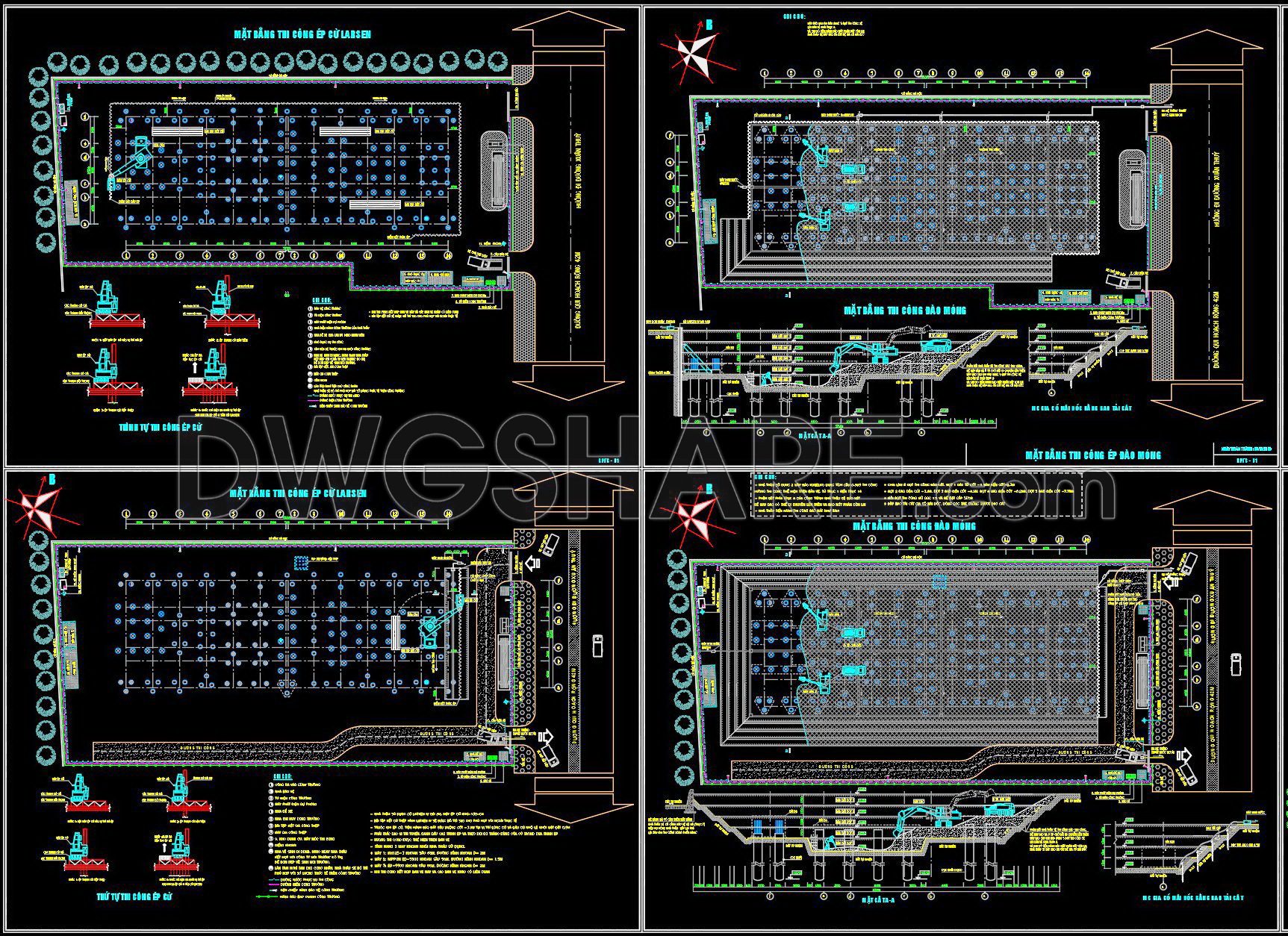

This is a detailed Construction Method Statement (CMS) drawing set, outlining the construction phases for the substructure (basement) of a large-scale project, such as a high-rise building, commercial center, or hotel.
These drawings focus on complex substructure engineering techniques. The contents can be organized according to the actual construction sequence as follows:
Phase 1: Sheet Piling and Excavation
This initial phase involves preparing and creating the underground workspace.
1. Larsen Sheet Piling Plan:
- This drawing illustrates the first step: installing a retaining wall system using Larsen steel sheet piles around the project’s perimeter.
- Purpose: The Larsen wall provides soil retention, prevents collapses, and acts as a groundwater barrier, creating a safe “box” for excavation to proceed inside.
2. Excavation Plan:
- Once the retaining wall is complete, excavation work begins.
- The drawing shows the extent and depth of the excavation, and importantly, illustrates the access ramps for vehicles (trucks, excavators) to enter and exit the site for soil removal.
Phase 2: Excavation Support and Bracing
As the excavation pit gets deeper, the pressure from the surrounding soil and groundwater becomes immense. This phase is crucial for securing the retaining wall.
Excavation Bracing Plan:
- These drawings (primarily in Image 2) detail the bracing system used to support the Larsen sheet pile wall.
- This system typically consists of horizontal steel beams (struts) and perimeter beams that run along the wall (walers), forming a robust internal frame that resists external pressures.
Phase 3: Main Foundation Construction
With the excavation pit safely secured, work on the building’s actual foundation begins.
- Foundation Piling Plan:
This drawing shows the layout and arrangement of numerous reinforced concrete foundation piles. These are the primary load-bearing elements for the entire structure.
- Blinding Concrete Plan:
Before constructing the main foundation, a layer of lean concrete (blinding concrete) is poured at the bottom of the pit to create a clean, flat, and dry working surface.
- Pile Cap Construction Plan:
This is the final step shown in these drawings. It illustrates the construction of reinforced concrete structures called “pile caps.” Each pile cap connects a group of foundation piles together, and the building’s columns will later be erected directly on top of them.
Summary
In conclusion, this is a highly professional and detailed Construction Method Statement package. It describes the entire complex engineering process for constructing the substructure of a major project. The sequence is clearly illustrated: Sheet Piling -> Excavation -> Bracing System Installation -> Load-Bearing Pile Installation -> Blinding Concrete -> Pile Cap Construction. These are tasks that demand a high level of technical expertise, experience, and precision in the construction industry.
32. An In-Depth Analysis of a Real-World Deep Excavation & Foundation CMS Free Download
Let’s see and download this Cad file for your reference. Or you can see more in Cad design library here Construction Methods.
- File format: .DWG
- Size: 1.18 MB
- Source: Collect
- AutoCAD platform 2018 and later versions. For downloading files there is no need to go through the registration process
Advertisements